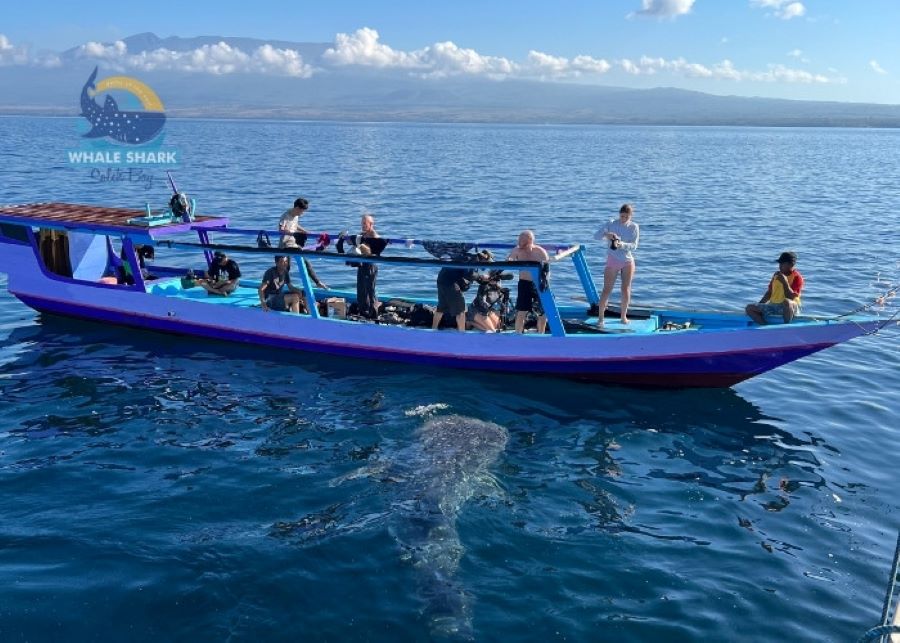
The first time I saw a whale shark in Saleh Bay, Sumbawa, I didn’t feel excited in the way I thought I would. I felt… quiet. It’s hard to describe unless you’ve been there, floating on the surface of the sea, when one of these gentle giants emerges below you like a shadow that slowly becomes a constellation. Everything slows down. Your breath, your thoughts, your sense of time. And maybe that’s the first lesson right there.
That moment made me realize that traveling isn’t always about doing more, checking boxes, or chasing thrills. Sometimes, the best kind of travel experience is the one that teaches you to pause. Whale sharks do that. Not by giving you a lecture or a brochure. They do it simply by being themselves—massive, calm, ancient, and utterly uninterested in your schedule.
I thought I was going on just another marine wildlife tour. What I got instead was a deep shift in how I move through the world.
They Change Your Pace
In Saleh Bay, the morning starts early. The sky is still soft, the boats gently rock against the dock, and no one is rushing. There’s no need to. The whale sharks show up when they want to, not when you decide they should. That’s a hard pill to swallow at first if you’re used to travel itineraries where every minute is planned.
But slowly, the ocean teaches you. You sip your coffee more slowly. You watch the horizon longer. You listen to the guide without multitasking. You let yourself be present in a way that’s rare in daily life.
Once in the water, the lesson becomes even clearer. You can’t force anything. The whale sharks glide by when they’re ready. You don’t chase them—you wait. You don’t shout—you float. And suddenly, you realize how rare it is, in travel and in life, to simply be instead of trying to do all the time.
They Make You Feel Wonderfully Small
There’s something transformative about being near a creature that can grow to 10 meters or more and yet chooses to move through the sea like a drifting cloud. One moment you’re scanning the water, hoping, guessing, doubting. Then out of nowhere, a shape appears beneath you—huge, spotted, graceful.
It passes by like time itself, unhurried and powerful. And in that moment, you understand your place in the world differently. Not less important—just… less central. You stop trying to be the main character. You’re just a lucky observer in a world much bigger than yourself.
That shift stays with you long after you dry off. On later hikes, in markets, on new islands, you find yourself taking up less space—not physically, but energetically. You listen more. You observe longer. You appreciate the quiet details.
They Teach Gentle Travel Habits
Before you get in the water, the team gives you a few simple rules: no touching. No chasing. Keep a respectful distance. These aren’t just about the whale sharks—they’re about your attitude as a traveler.
I’ve done tours before where people were elbowing each other to get the “perfect” shot, but this felt different. More reverent. More intimate. The guides reminded us that we are entering their space, not the other way around.
At first, it’s tempting to inch closer, to get the GoPro shot of a lifetime. But when you see the whale shark swim by, calm and unbothered, you feel this sense of peace that makes you not want to disturb it. That’s when you realize: the most beautiful travel moments often come when you stop trying to grab them.
The lesson doesn’t end in the water. Later that week, I visited a local village, and instead of walking in with my camera out, I sat down for a while first. I listened. Asked questions. That same energy—respect, stillness, humility—followed me on land.
They Make You Care More
After swimming with whale sharks, it’s impossible not to care about them. Once you’ve looked into the wide mouth of a creature that doesn’t even have teeth sharp enough to harm you, your heart softens. You want to protect them. You want to learn how your actions affect their home.
That’s how real conservation starts—not with guilt or pressure, but with connection.
You begin reading labels on your sunscreen. You skip plastic bottles. You ask your guide where your tourism money goes. You want to support businesses and communities that treat these animals with the respect they deserve.
That’s the quiet magic of a good whale shark trip Sumbawa. It doesn’t just give you a memory—it gives you a reason to do better.
They Connect You to the People of the Place
In Saleh Bay, whale shark sightings often happen near bagan, traditional fishing platforms built over the water. Fishermen work there all night, and in the morning, the whale sharks come to feed on the small fish.
When you meet the crew—many of them locals who’ve known the sea their whole lives—you begin to understand how deeply connected these communities are to the ocean. They don’t talk about “marine life” the way we do in textbooks. They talk about neighbors. Patterns. The sea as an old friend who speaks in waves and shadows.
Sharing a boat with them, hearing their stories, you stop feeling like a tourist. You start feeling like a guest. And the way you behave changes. You want to learn, not just see. You want to listen, not just take.
These kinds of interactions—real, grounded, unfiltered—are what stay with you long after the salt has dried from your hair.
They Help You Unplug and Tune In
Whale sharks don’t follow Wi-Fi signals. The further you go from shore, the less connection you have to the digital world—and the more you reconnect with everything else.
Out at sea, waiting for a whale shark to appear, you start to notice things again. The shape of the clouds. The sound of the boat rocking. The way sunlight dances on the surface of the water. You feel your mind slow down, your shoulders drop, your breathing deepen.
And when the whale shark does appear, you’re completely there for it. Not trying to post. Not distracted. Just present.
It’s a kind of presence that’s hard to describe, but once you’ve tasted it, you chase it in other places. You put your phone down more often. You walk slower through new cities. You take fewer pictures, but remember more moments.
They Leave You Changed
I didn’t expect a creature with no voice, no arms, and no visible emotion to become one of the most powerful teachers I’ve ever met while traveling. But here I am, months later, still hearing its silent lesson:
Be still. Be curious. Be kind.
And honestly, I think the world needs more of that—especially in tourism. We need travelers who see beyond themselves, who know how to move gently, who remember that they are visitors, not conquerors.
If you’re lucky enough to cross paths with a whale shark in Saleh Bay, take it as more than a “tick” on your bucket list. Take it as an invitation to shift. To soften. To see your role in the world a little differently.
That’s what a good Saleh Bay whale shark tour offers: not just an encounter, but an education in awe, humility, and respect. And if you let it, it might just turn you into the kind of traveler the world really needs more of.